Disaster Preparedness for Babysitters in Japan: A Practical Guide
Japan is one of the most seismically active countries in the world. If you're working as a babysitter here, the possibility of an earthquake — or another natural emergency — during a sitting session is something you need to think about before it happens, not while it's happening.
This guide covers what to prepare before each job, how to respond in the moment if something occurs, and how to communicate with parents when normal channels may not be working. Being prepared isn't just about keeping children safe — it's also one of the clearest signals you can give a Japanese family that you're a true professional.
Before the Job: Preparation That Happens at Home
The most important disaster preparation happens before you ever walk through a family's door.
Know your own emergency plan
- Identify the evacuation routes from your own home to your nearest designated evacuation site (指定避難場所). In Japan, these are typically schools, parks, or community centres — search your ward or city name plus 避難場所 to find yours.
- Keep a small emergency kit at home: water, a torch, a power bank, a basic first aid kit, and a portable radio. Japan's Consumer Affairs Agency recommends a minimum of three days' supplies.
- Download the Tokyo Bosai (東京防災) app or equivalent for your prefecture. It provides real-time alerts and evacuation guidance in English.
- Register for J-Alert (全国瞬時警報システム) notifications on your phone. These push emergency alerts for earthquakes, tsunamis, and other disasters in your area.
Know the family's emergency plan before you start
When you're confirmed for a job, ask the parent one simple question: 'Do you have an emergency contact and evacuation plan you'd like me to follow?' Most Japanese families with young children will have thought about this. The answers you need:
- Emergency contact number for the parent (and a backup — a grandparent, neighbour, or other trusted adult)
- The family's designated evacuation site if they need to leave home
- Location of the family's emergency kit in the home
- Any medical considerations for the child (allergies, conditions) that would be relevant in an emergency
During a Sitting: What to Do If an Earthquake Strikes
Japan uses a seismic intensity scale (震度, shindo) from 1 to 7. Most people in Tokyo experience mild shaking several times a year. Here's how to calibrate your response:
Shindo 1–2: Light shaking
Stay calm. Do not act alarmed in front of children — your response shapes theirs. Wait for the shaking to stop and continue as normal.
Shindo 3–4: Noticeable shaking, objects may move
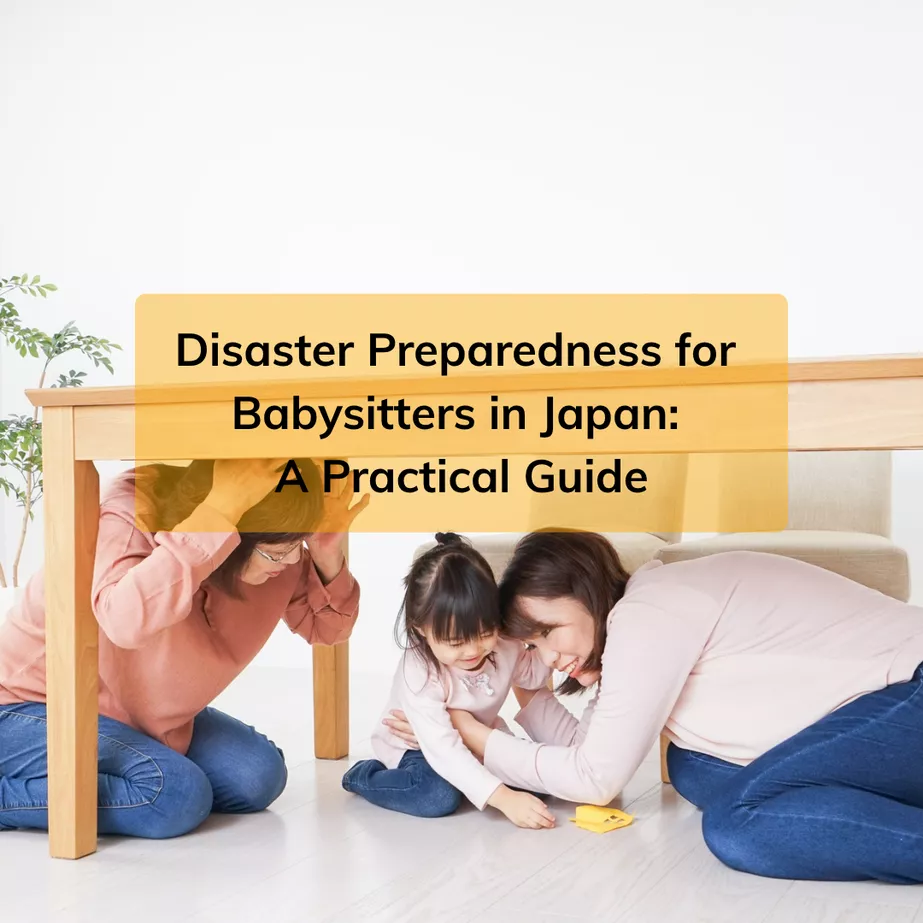
Move away from windows and heavy objects. Guide children under a sturdy table or desk if one is nearby. Stay low. Do not run outside during shaking — falling glass and debris from buildings is a significant risk outdoors.
Shindo 5–7: Strong to violent shaking
- Stay low and protect your own head and the child's head first
- Get under a table, crouch against an interior wall, or move away from windows
- Do not attempt to move to another room during strong shaking
- Once shaking stops, check for injuries
- Turn off gas appliances if it is safe to do so
- Open a door to prevent it from jamming shut — this is standard practice in Japan
- Do not use elevators
- If the building may be structurally compromised, evacuate to the designated outdoor site
- Contact the parents immediately via CareFinder messaging or direct call
Communicating with Parents During an Emergency
Phone networks in Japan are often overwhelmed immediately after a major earthquake. Voice calls may not connect. Here's the priority order for communication:
- WhatsApp or LINE message — these use internet data rather than voice networks and are often more reliable immediately after a quake
- CareFinder platform messages
- NTT Disaster Message Board (災害用伝言板, 171) — a national service where anyone can record a brief voice message tied to a phone number. It's accessible even when networks are congested.
Send a short, factual message as soon as you are able: your location, the child's status, and what you are doing. Even 'We are safe, sheltering in place at the apartment, will update when I can' is enormously reassuring to a parent.
Fire, Gas Leak, or Flood
Fire
- Never attempt to fight a fire — your priority is getting the children out
- In Japan, call 119 for fire and ambulance
- Use the nearest stairwell, not the elevator
- If smoke is present, stay low and cover mouths with a damp cloth
- Go to the building's designated evacuation meeting point
Gas leak
- Do not operate any electrical switches — a spark can ignite gas
- Open windows and doors without turning on lights
- Leave the building with the children and call the gas company from outside
- The Tokyo Gas emergency number is 0120-594-594 (24 hours)
Typhoon or heavy rain warning
- Typhoon warnings are issued in advance — if a major storm is forecast on a day you're scheduled to work, contact the family early to discuss contingency plans
- If a flood warning is issued during a sitting, shelter in place on an upper floor unless evacuation is ordered
- Monitor NHK World or your local government's emergency app for updates
After the Emergency: Handover to Parents
When parents return or contact you after an emergency, give them a clear, calm debrief: what happened, how the child responded, what you did, and the child's current condition. If the child was frightened, mention that and note how you helped them calm down. This information matters to parents and demonstrates your professionalism and care.
Document anything significant in writing — a message on the CareFinder platform creates a record that both parties can refer to.
Being prepared is one of the most professional things a sitter can do. Register on CareFinder to join a community of vetted, insured, government-registered sitters.
Register as a Sitter →Recent blog


